
12 ICD-10 Codes to Report Common Winter-Related Accidents and Conditions

by | Posted: Dec 13, 2019 | Medical Coding

Share this post:

Winter is here and you need to be extra careful with your health as heavy snow, ice, strong winds and freezing rain are expected. While this is the holiday season, there is also the possibility of injuries from various activities. These injuries must be documented in medical claims using relevant ICD-10 codes. A professional medical billing company that offers the services of certified coders can help with this.

Read the infographic below
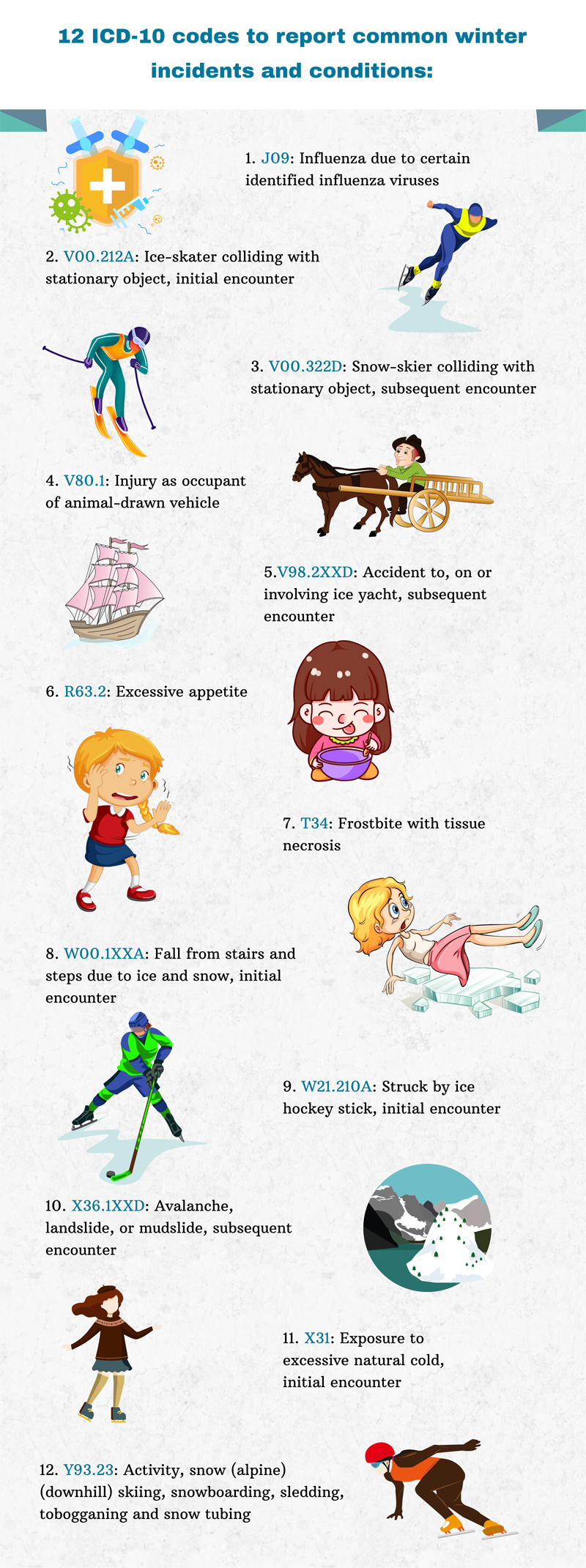
ICD-10 Codes to Report Common Winter-related Accidents and Conditions

People should take extra precautions to stay safe and healthy in winter season, but if an injury or illness occurs, it’s important to get immediate medical attention. Early diagnosis and care can prevent further damage and need for prolonged treatment. The support of an experienced medical billing service provider can prove very valuable when it comes to ensuring timely and accurate claims submission for optimal reimbursement.

Rajeev Rajagopal, the President of OSI, has a wealth of experience as a healthcare business consultant in the United States. He has a keen understanding of current medical billing and coding standards.
More from This Author
Rajeev Rajagopal

Subscribe to Our Newsletter

Stay informed with our latest updates and insights.

Subscription Form

Related Posts

Abdominal Aortic Aneurysm (AAA) – Screening and Coding Guidelines

Abdominal Aortic Aneurysm (AAA) – Screening and Coding Guidelines

Abdominal Aortic Aneurysm (AAA) screening is subject to specific payer coverage rules and documentation requirements, making it a high-risk area for billing errors. Claims for this preventive cardiovascular imaging are closely reviewed by both Medicare and commercial...

What Are the ICD-10 Codes for Hyperlipidemia?

What Are the ICD-10 Codes for Hyperlipidemia?

Hyperlipidemia is a common medical condition characterized by elevated levels of lipids—such as cholesterol and triglycerides—in the blood. In the ICD-10 classification, hyperlipidemia falls under the “E” category, which includes endocrine, nutritional, and metabolic...