
ICD-10 Codes to Report Valentine’s Day Mishaps

by | Posted: Jan 27, 2021 | Medical Coding

Share this post:

February, the American heart month, is the month of love too. Observed on February 14 each year, Valentine’s Day or Saint Valentine’s Day is the day when lovers express their affection with greetings and gifts. Games, dinner, shopping and other activities could pose the risk of injury on this wonderful day. Any “sweet” mishaps on this Valentine’s Day can be documented using specific ICD-10 codes. For any injury physicians treat, medical coding companies can assist with the correct codes on the medical claims.
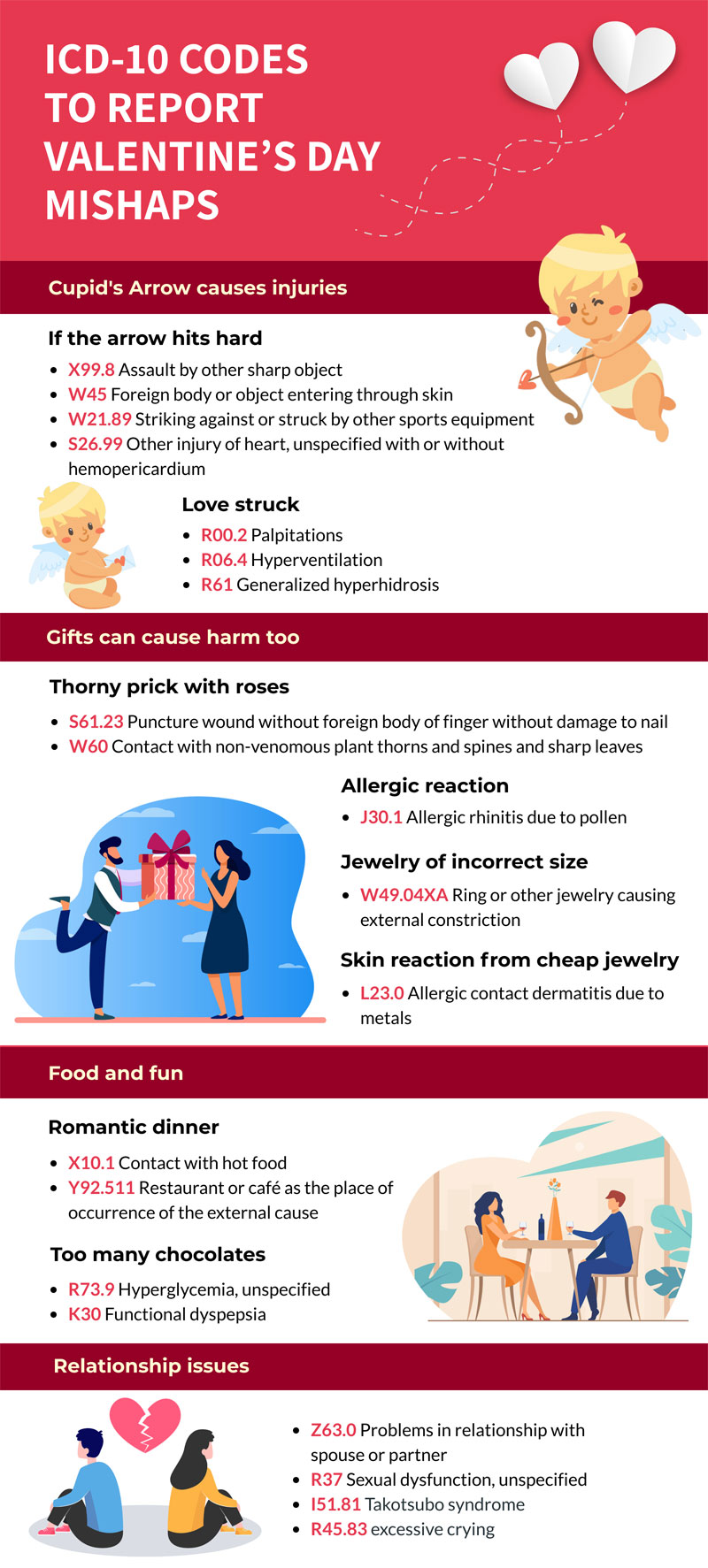
ICD-10 Codes to Report Valentine’s Day Mishaps

In the month of February love is in the air. Unfortunately, negative incidents may also occur. Healthcare providers and ER departments must be prepared on February 14 to troubleshoot Valentine’s Day-related mishaps. Whatever injuries or accidents happen, there’s bound to be an ICD-10 code for it. Professional medical billing companies can ensure accurate medical codes to report any mishaps on your medical claims.

Rajeev Rajagopal, the President of OSI, has a wealth of experience as a healthcare business consultant in the United States. He has a keen understanding of current medical billing and coding standards.
More from This Author
Rajeev Rajagopal

Subscribe to Our Newsletter

Stay informed with our latest updates and insights.

Subscription Form

Related Posts

Abdominal Aortic Aneurysm (AAA) – Screening and Coding Guidelines

Abdominal Aortic Aneurysm (AAA) – Screening and Coding Guidelines

Abdominal Aortic Aneurysm (AAA) screening is subject to specific payer coverage rules and documentation requirements, making it a high-risk area for billing errors. Claims for this preventive cardiovascular imaging are closely reviewed by both Medicare and commercial...

What Are the ICD-10 Codes for Hyperlipidemia?

What Are the ICD-10 Codes for Hyperlipidemia?

Hyperlipidemia is a common medical condition characterized by elevated levels of lipids—such as cholesterol and triglycerides—in the blood. In the ICD-10 classification, hyperlipidemia falls under the “E” category, which includes endocrine, nutritional, and metabolic...