

In-vitro fertilization (IVF) is one of the most advanced reproductive treatments available today, offering hope to patients struggling with infertility. While clinical expertise is vital for successful patient outcomes, it is the administrative work – particularly IVF billing and coding – that ensures healthcare providers receive accurate reimbursement. Compared to traditional medical billing and coding, IVF billing is far more complex as it involves multiple procedures, stages of care, and specific payer rules.
This step-by-step IVF billing and coding guide for healthcare providers explains the complete workflow, highlights essential codes, and outlines ways to avoid common errors.
Step-by-Step IVF Billing and Coding Guide for Providers
Accurate IVF billing and coding helps fertility clinics maintain financial stability and deliver a smooth experience for patients. Unlike general medical claims, IVF involves multiple diagnostic tests, lab procedures, surgical interventions, and follow-up appointments. In addition, coverage varies widely among insurers, making it crucial for clinics to understand how to correctly document, code, and bill each component. This is where specialized medical billing and coding services become vital, as they reduce errors, prevent denials, and improve overall revenue cycle performance.
Enhance Your IVF Billing Accuracy – Get Expert Support Today!
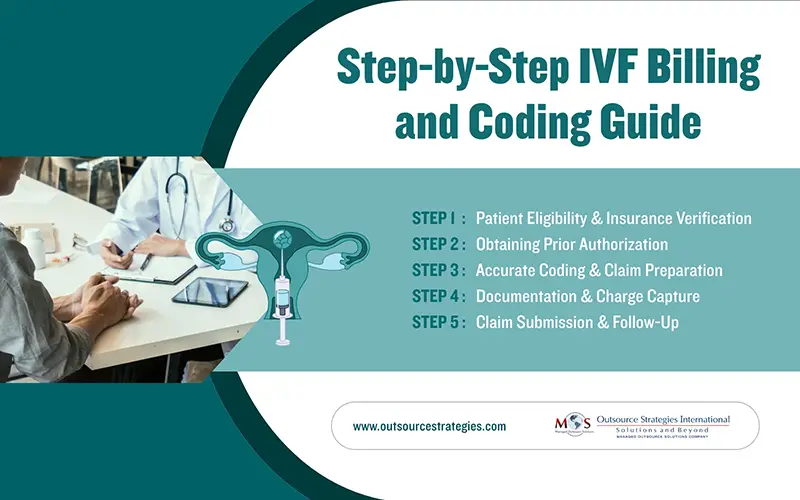
Below is a streamlined and practical overview of the IVF billing process, from patient onboarding to claim reimbursement.
- Patient Eligibility and Insurance Verification – Before initiating any fertility treatment, providers must thoroughly confirm the patient’s insurance coverage, as IVF benefits vary widely between carriers and plans. This step involves reviewing whether infertility services are covered, identifying specific inclusions or exclusions, and checking for cycle limitations, lifetime maximums, mandatory waiting periods, or prerequisite treatments. Verification should also confirm coverage for diagnostics, medications, lab procedures, and ultrasounds, since insurers often separate these benefits. Once all information is gathered, clinics must communicate the patient’s financial responsibility – such as copays, deductibles, and out-of-pocket costs – to avoid future misunderstandings. Accurate IVF eligibility and benefits verification not only ensures smoother claims processing but also sets clear expectations for patients and strengthens the overall IVF billing and coding process.
- Obtaining Prior Authorization – Prior authorization (PA) is essential in most IVF cases. Insurers typically require PA for treatments such as ovarian stimulation, embryo transfer, egg retrieval, and related lab procedures. Missing or incomplete authorizations lead to immediate claim denials, making this step non-negotiable. To secure prior authorization successfully –
- Submit detailed clinical notes that justify medical necessity
- Include diagnostic results, infertility history, and treatment plans
- Track PA requests and maintain communication with insurance reviewers
- Document all approvals before scheduling procedures
In short, efficient PA management can significantly reduce delays in the IVF billing process.
Accurate Coding and Claim Preparation – Selecting the correct procedure and diagnosis codes is an important aspect of IVF billing and coding. IVF treatments incorporate numerous procedures, each requiring precise CPT and ICD-10 codes to ensure proper reimbursement.
Essential CPT Codes for Fertility Treatments
Using accurate CPT codes for fertility treatments helps payers understand exactly what was performed. Some commonly used codes include –
- 58970 – Follicle puncture for oocyte retrieval
- 58974 – Embryo transfer
- 58322 – Artificial insemination (intra-cervical or intra-uterine)
- 89261 – Sperm isolation; complex preparation
- 89342 – Storage/cryopreservation of sperm
These codes may require additional modifiers (e.g., 26, TC, 59) depending on which part of the service – professional, technical, or both – was performed. Accurate modifier usage ensures the claim is processed correctly on the first submission.
- Documentation and Charge Capture – Detailed t documentation is essential for IVF billing compliance. Key documentation must include – clinical justification for IVF, ovarian stimulation monitoring notes, procedure documentation for retrieval, transfer, and lab work, anesthesia and medication details and any complications or deviations from the planned procedure.
- Claim Submission and Follow-up – This is a critical stage in the IVF billing workflow, ensuring that every coded service is accurately transmitted to the payer and processed without delay. Once all IVF procedures are properly documented, coded, and verified, the claim must be submitted promptly. Timeliness is essential, as delayed submissions can lead to missed filing deadlines and reimbursement loss. After submission, consistent follow-up is important – payers may request additional information, flag errors, or issue partial payments. Medical billing teams must monitor claim statuses daily, address rejections immediately, correct coding or documentation issues, and resubmit claims when necessary. Effective follow-up also includes tracking denials, identifying patterns, and appealing unjustified decisions to maximize reimbursement. A strong claim submission and follow-up process ensures accuracy, reduces revenue leakage, and keeps the IVF billing and coding cycle moving efficiently.
Common IVF Billing Mistakes and How to Avoid Them
- Incorrect or Incomplete Coding – Using the wrong CPT or ICD-10 code, or omitting required modifiers, results in denials and delayed payments. In order to avoid this mistake, maintain updated coding resources, double-check codes before submission and train staff regularly on reproductive endocrinology coding.
- Missing Prior Authorization – One of the most frequent IVF claim denials occurs when PA was required but not obtained. Even if the service is medically necessary, insurers may refuse payment if PA is missing. Assign a dedicated staff member or rely on expert medical billing and coding services for PA management.
- Insufficient Documentation – If documentation does not fully support the services billed, payers may flag claims for review or denial. To avoid this mistake, make sure that all providers document treatments in real time and include clinical justification, procedure details, and outcomes.
- Incorrect Use of CPT Modifiers – Misusing or using wrong modifiers can lead to claim rejections or delays. For example, using Modifier 59 incorrectly to indicate separate procedures on the same day can cause issues with insurers. Providers must understand when and how to use each modifier, such as Modifier 26 for professional services or Modifier TC for technical services.
- Missing or Incorrect Diagnosis Codes (ICD-10) – Failing to match the correct ICD-10 diagnosis code to the IVF procedure can lead to claim denials. Ensure that the diagnosis justifies the treatment provided.
- Mismanagement of Multi-Cycle or Package Billing – Many fertility clinics offer bundled IVF packages or multi-cycle plans. Without proper tracking and coding, practices may under bill or overbill certain services. Therefore, create cycle-based checklists and maintain strict internal tracking systems for package components.

Streamline Your Fertility Clinic’s Revenue Cycle –
Best Practices for Improving IVF Billing and Coding Accuracy
Improving IVF billing and coding accuracy requires a structured approach that combines expertise, technology, and proactive workflow management. By implementing the right strategies, fertility clinics can reduce denials, increase reimbursement, and maintain compliance with payer requirements –
- Engage Highly Trained IVF Billing Specialists – Skilled specialists understand payer rules and ensure accurate code selection, reducing denials.
- Use Advanced Practice Management and EHR Systems – Modern billing software helps automate coding, track patient cycles, and minimize manual errors. Integrating EHR with billing systems ensures accurate charge capture and documentation.
- Implement Strict Internal Audits – Regular audits help identify coding errors, missing documentation, and billing inconsistencies. These reviews strengthen compliance and prevent recurring mistakes.
- Maintain Clear Communication with Patients – Transparent discussions about coverage, limitations, and out-of-pocket costs prevent misunderstandings. Clear communication improves patient trust and reduces billing disputes.
- Track Denials and Appeal Trends – Monitoring denials helps clinics spot recurring issues in coding, documentation, or authorization workflows. A structured appeals process helps recover revenue that might otherwise be lost.
- Leveraging AI Coding Services – AI-powered coding solutions can enhance accuracy and efficiency in IVF billing. These tools analyze clinical documentation, suggest accurate codes, and flag inconsistencies, reducing manual errors and speeding up the reimbursement process. Leveraging AI also helps clinics keep up with changing payer rules and coding updates, ensuring consistent compliance.

IVF billing and coding is a specialized subset of healthcare administration that demands precision, consistent documentation, and in-depth knowledge of insurer requirements. Follow this step-by-step IVF billing and coding guide for providers to accelerate reimbursement, reduce denials, and maintain positive patient relationships. With the right blend of training, technology, and workflow discipline, providers can navigate the complexities of IVF billing with confidence and clarity.
Enhance Your IVF Billing Accuracy and Streamline Your Billing Workflow.

More from This Author