Amyloidosis is a rare medical condition caused by the accumulation of the protein amyloid in organs. Amyloid accumulation can result in organ dysfunction. Amyloidosis can affect the heart, kidneys, liver, spleen, nervous system and digestive tract. This condition can exist on its own or may be related to other problems such as hereditary factors, inflammatory diseases or long-term dialysis. If not diagnosed or treated early, the condition can become chronic and result in life-threatening organ failure. There are different types of amyloidosis – AL amyloidosis (immunoglobulin light chain amyloidosis), AA amyloidosis (also called secondary amyloidosis), hereditary amyloidosis (familial amyloidosis), wild-type amyloidosis and localized amyloidosis.
Common signs and symptoms include – swelling of the ankles and legs, severe fatigue and weakness, unintentional weight loss, shortness of breath, difficulty swallowing, and more. Treatment options for this condition include a combination of medications, chemotherapy and organ or stem cell transplants. Cardiology medical coding is complex and tricky, and reporting diagnosis and treatment on medical claims can be challenging and time consuming for providers. Cardiologists treating Patients with Amyloidosis can rely on professional medical billing companies to report the condition correctly for reimbursement purposes.
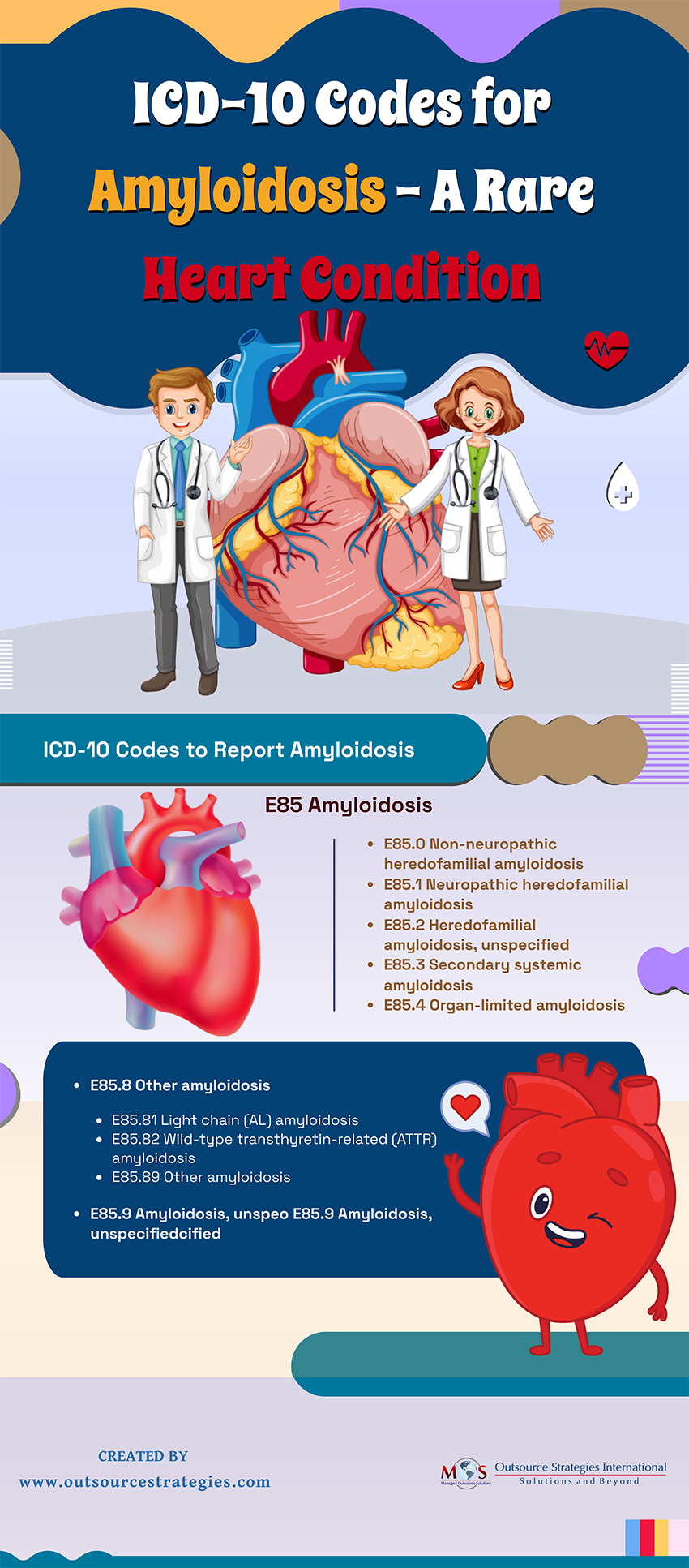
Check out the infographic below

More from This Author