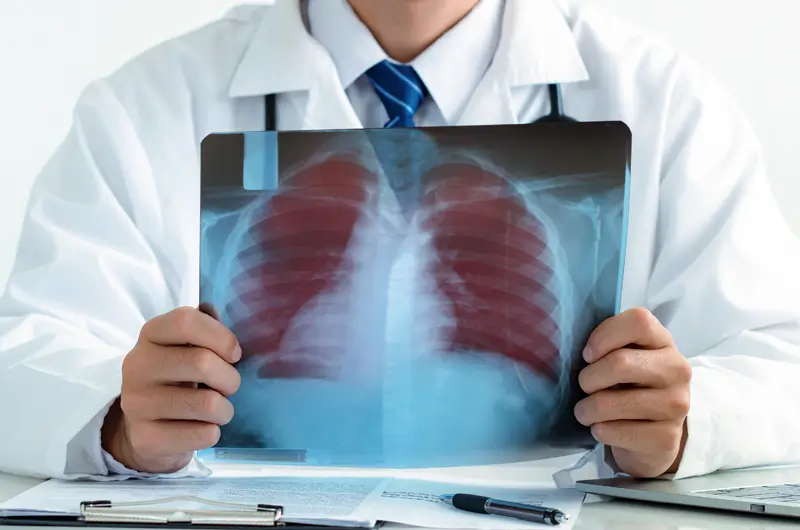
Chronic lung disease is a major public health challenge in the U.S. Up to 35 million Americans live with chronic lung diseases such as asthma, Chronic Obstructive Pulmonary Disease (COPD), emphysema, and chronic bronchitis. COPD accounts for a major share of respiratory-related ED visits and chronic lower respiratory diseases remain the fifth leading cause of death in the country.
For healthcare providers, knowing how to document and code chronic respiratory disease is essential for proper billing and reimbursement. However, there are various types of chronic lung disease and these conditions are often underreported due to overlapping symptoms and comorbidities. This underscores the importance of precise diagnosis and accurate chronic lung disease coding using the appropriate ICD-10 codes. Today, medical coding platforms such as MedGenX by DeepKnit AI are helping healthcare organizations overcome the complexities of respiratory coding and billing.
Simplify complex respiratory coding with AI.
Discover how MedGenX by DeepKnit AI can streamline chronic lung disease coding.
This post outlines discusses common chronic pulmonary conditions, their ICD-10 codes, and documentation requirements.
Common Types of Chronic Lung Disease and their ICD-10 Codes
The American Lung Association categorizes the main types of chronic lung conditions as restrictive, obstructive, and vascular diseases, each affecting the lungs differently.
- Restrictive lung disease (Interstitial Lung Disease (ILD)
Restrictive lung disease comprises over 100 disorders that cause progressive scarring (fibrosis) of the lung tissue, making them stiff and unable to expand, restricting air inhalation. Restrictive lung disease includes pulmonary fibrosis, sarcoidosis, and work-related lung diseases.
The primary ICD-10-CM code for unspecified restrictive lung disease is:
- J98.4: (Other disorders of lung)
If the restrictive lung disease is caused by scarring, inflammation, or fibrosis of the lung tissue, assign a code from the J84 category: J84.170-J84.178 (Specific subcategories for interstitial lung disease with fibrosis in diseases classified elsewhere).
- Pulmonary fibrosis or Idiopathic Pulmonary Fibrosis (IPF): A chronic lung disease marked by progressive scarring of lung tissue, leading to reduced lung function and increasing shortness of breath.
ICD-10 codes for Idiopathic Interstitial Pneumonias:
- J84.9: Unspecified interstitial pulmonary disease – a broader category when fibrosis is part of interstitial lung disease but not clearly defined.
- J84.10: Pulmonary fibrosis, unspecified – used when documentation does not specify cause/type.
- J84.112: Idiopathic pulmonary fibrosis (IPF) – Progressive, chronic scarring of lung tissue with no known cause.
- J84.89: Other specified interstitial pulmonary disease – for fibrosis linked to autoimmune disease, environmental exposure, or drug-induced causes.
- Sarcoidosis: An inflammatory disease that causes clusters of immune cells (granulomas) to form in the lungs, lymph nodes, and other organs.
- D86: Sarcoidosis
- D86.0: Sarcoidosis of the lung
- D86.1: Sarcoidosis of the lymph nodes
- D86.2: Sarcoidosis of the lung with sarcoidosis of the lymph nodes
The primary ICD-10 code category for sarcoidosis is
Common billable codes under this chronic respiratory system disease category are:
- Work-related (occupational) chronic lung diseases: A group of occupational lung conditions such as silicosis, histoplasmosis, or coal worker’s pneumoconiosis (black lung) causing chronic respiratory impairment due to exposure to harmful dusts, fungi, or other environmental factors in the workplace.
- J60: Coalworker’s pneumoconiosis (Black Lung Disease)
- J61: Pneumoconiosis due to asbestos and other mineral fibers (Asbestosis).
- J68.4: Chronic respiratory conditions due to inhalation of chemicals, gases, fumes, and vapors (e.g., chronic chemical bronchitis).
The exact code depends entirely on the specific dust, gas, or chemical substance inhaled in the workplace. For example:
- Obstructive or Airway Lung Diseases
In this condition, the airways are blocked or obstructed, making it harder to breathe out all the air in the lungs. Obstructive lung disease can cause airway passage inflammation airways, buildup of thick mucus, and damage to the walls of the air sacs. Conditions in this category include asthma, chronic obstructive pulmonary disease (COPD), bronchiectasis, and cystic fibrosis:
- Asthma: Chronic inflammation of the airways that causes wheezing, breathlessness, and chest tightness. Triggers like allergens or cold air cause the airways to tighten.
ICD-10 codes J45.0 – J45.9: Covers mild intermittent, mild persistent, moderate persistent, severe persistent, exercise-induced, and unspecified asthma.
Breakdown of asthma ICD-10 codes: J45.2 – J45.5ICD-10 codes for Asthma Severity
- J45.2: Mild intermittent asthma
- J45.3: Mild persistent asthma
- J45.4: Moderate persistent asthma
- J45.5: Severe persistent asthma
- J45.909: Unspecified asthma, uncomplicated
- J45.901: Asthma with acute exacerbation
- J45.902: Unspecified asthma with status asthmaticus
- J45.990: Exercise-induced bronchospasm
- J45.998: Other asthma
- J45.0: Predominantly allergic asthma (includes allergic rhinitis with asthma, atopic asthma, and extrinsic asthma)
- J45.1: Nonallergic asthma (includes intrinsic asthma)
- J45.8: Mixed asthma (combination of allergic and nonallergic)
- J45.9: Unspecified asthma (includes asthmatic bronchitis and unspecified bronchial asthma)
Unspecified asthma with complications
Distinct subcategories:
Specific Asthma Types and Complications
- Chronic Obstructive Pulmonary Disease (COPD): A progressive disease that includes emphysema and chronic bronchitis. It limits airflow due to damaged, less elastic airways and trapped air in the lungs.
- J44.0: Chronic obstructive pulmonary disease with (acute) lower respiratory infection (requires an additional code to identify the specific infection).
- J44.1: Chronic obstructive pulmonary disease with (acute) exacerbation (used when the patient experiences a sudden worsening of symptoms).
- J44.89: Other specified chronic obstructive pulmonary disease (often used for overlapping conditions, such as asthma with COPD)
- J44.9: Chronic obstructive pulmonary disease, unspecified (use when the disease is documented without further specifics or exacerbations).
- Bronchiectasis: A condition where the airways become permanently widened and scarred, causing a buildup of excess mucus and frequent infections
- J47.0: (Bronchiectasis with acute lower respiratory infection): Used when the patient presents with both bronchiectasis and an acute lower respiratory infection (like acute bronchitis).
- J47.1: (Bronchiectasis with (acute) exacerbation): Used when the patient experiences a sudden worsening or flare-up of their bronchiectasis symptoms.
- J47.9: (Bronchiectasis, uncomplicated): Used when the patient has a diagnosis of bronchiectasis without any acute lower respiratory infection or acute exacerbation.
- Cystic fibrosis: An inherited genetic disorder that causes the production of thick, sticky mucus in the lungs and other organs, leading to chronic respiratory infections, airway damage, and progressive loss of lung function.
- E84.0: Cystic fibrosis with pulmonary manifestations
- E84.11: Meconium ileus in cystic fibrosis
- E84.19: Cystic fibrosis with other intestinal manifestations
- E84.8: Cystic fibrosis with other manifestations
- E84.9: Cystic fibrosis, unspecified
ICD-10 codes J44.0 – J44.9: Chronic obstructive pulmonary disease with acute lower respiratory infection, with acute exacerbation, or unspecified.
ICD-10 codes J47.0 – J47.9: Includes bronchiectasis with acute exacerbation, with infection, or unspecified.
ICD-10 codes E84.0 – E84.9: Cystic fibrosis with pulmonary manifestations, with intestinal manifestations, with other manifestations, or unspecified.
- Pulmonary Vascular Lung Diseases
These types of lung diseases affect the blood vessels in the lungs. This makes it difficult for the heart and lungs to circulate oxygenated blood throughout the body. Examples of these diseases:
- Pulmonary hypertension: In this condition, blood pressure in the arteries of the lungs becomes abnormally high, placing strain on the heart and causing shortness of breath, fatigue, and heart failure.
- I27.0: Primary pulmonary hypertension (idiopathic/PAH)
- I27.20: Pulmonary hypertension, unspecified
- I27.21: Pulmonary hypertension due to left heart disease
- I27.22: Pulmonary hypertension due to lung diseases and hypoxia
- I27.24: Chronic thromboembolic pulmonary hypertension (CTEPH)
- I27.29: Other secondary pulmonary hypertension
- I27.83: Eisenmenger’s syndrome (right-to-left shunt)
- Pulmonary embolism: In this serious condition, a blood clot, usually originating in the legs, travels to and blocks one or more arteries in the lungs, impairing blood flow and oxygen exchange.
- I26.0: Pulmonary embolism with acute cor pulmonale
- I26.01: Septic pulmonary embolism with acute cor pulmonale
- I26.02: Saddle embolus with acute cor pulmonale
- I26.09: Other pulmonary embolism with acute cor pulmonale
- I26.90: Septic pulmonary embolism without acute cor pulmonale
- I26.92: Saddle embolus without acute cor pulmonale
- I26.99: Other pulmonary embolism without acute cor pulmonale
Understanding the different types of chronic lung disease is important, but accurate coding is critical for compliance, reimbursement, and quality patient care. Since reporting chronic lung disease involves multiple complexities, avoiding coding errors in chronic lung disease claims requires careful attention.
Medical Coding Challenges for Chronic Lung Disease
The challenges of medical coding for respiratory diseases include:
- Overlapping diagnoses — COPD, emphysema, and chronic bronchitis often coexist, making it difficult to assign the most accurate ICD-10 code.
- Exacerbation vs. stable disease — Coders must distinguish between acute exacerbations and chronic baseline conditions, which impacts reimbursement.
- Documentation gaps — If the physician does not specify severity (mild, moderate, severe) or type (chronic bronchitis vs. emphysema), it leads to coding gaps.
- Comorbidities — Sequencing and precise coding of conditions like asthma, pneumonia, or cardiovascular disease is complex.
- Risk adjustment — Accurate coding is critical for HCC models and NCQA quality measures, but errors can distort patient risk scores.
- Modifier misuse — Incorrect use of CPT modifiers for pulmonary procedures (e.g., spirometry, bronchoscopy) can trigger denials.
Adhering to best practices can help manage these challenges and avoid errors.
Chronic Respiratory Disease Coding and Billing Best Practices
Accurate claims for chronic respiratory diseases require precise documentation of severity, temporality, and exacerbation status. Coders should avoid unspecified codes, link procedures to acute diagnoses, and verify Medicare or regional CCI edits to prevent denied claims. Here are the best practices for chronic lung disease medical billing and coding:
- Detailed Documentation: Comprehensive clinical notes that clearly reflect the patient’s current condition and disease severity, exacerbations, comorbidities, and treatments promote coding accuracy. Missing details can result in claim denials.
- Accurate ICD-10 Coding: Precise coding using the correct ICD-10 codes (e.g., J44 for COPD, J45 for asthma) ensures claims are accepted and reimbursed properly.
- Asthma & COPD Overlap (ACOS): When asthma and COPD overlap, the correct ICD-10 coding is usually under the COPD category (J44), specifically J44.89 “Other specified chronic obstructive pulmonary disease. If an acute exacerbation is documented, J44.1 is used. Asthma codes (J45.-) are not assigned separately unless the provider documents asthma as a distinct condition.
- History of Tobacco Use: Routinely code nicotine dependence (F17.-) or a personal history of nicotine dependence (Z87.891) as comorbidities to support medical necessity for respiratory therapies. Capture smoking status, secondhand smoke exposure, and vaccination history (Z-codes) to support claims.
- Comorbidity Capture: When a patient with chronic lung disease (like COPD, interstitial lung disease, or pulmonary fibrosis) develops sequelae (long-term complications) or pulmonary hypertension, and those conditions are clinically evaluated or treated during the encounter, they must be documented by the provider and coded separately.
- Treatment coding: Billable services include medications, supplemental oxygen (Z99.81), pulmonary rehabilitation (HCPCS/CPT codes), and surgical interventions.
Simplify Chronic Lung Disease Coding with AI-Driven Solutions
Accurate coding of chronic lung disease requires a clear understanding of disease-specific ICD-10 guidelines, detailed clinical documentation and review, and attention to associated conditions and complications. Proper coding supports appropriate reimbursement, risk adjustment, quality reporting, and continuity of patient care.
As respiratory conditions become more complex, AI medical coding services with human-in-loop validation are helping practices improve coding accuracy, identify documentation gaps, reduce manual effort, and streamline claim submission. By combining clinical expertise with AI-driven coding technology, practices can strengthen revenue cycle performance while maintaining compliance and supporting better patient outcomes.
Enhance coding efficiency and revenue performance using intelligent automation that supports compliant documentation and cleaner claims.

More from This Author