

Low vision refers to chronic visual impairments that cannot be corrected with glasses, contact lenses, or medical or surgical treatment. It includes different degrees of sight loss, from blind spots, poor night vision and problems with glare to an almost complete loss of sight. With millions of people in the United States living with a visual impairment, vision rehabilitation services play a key role in helping them make the most of the vision they have. In ophthalmology, accurate diagnosis coding using the correct vision impairment ICD-10 codes ensures appropriate claim reimbursement, avoid compliance risks, proper patient billing, and clear medical records that support continuity of care and clinical decision-making. Many eye care practices rely on medical billing and coding services to achieve these goals.
February is low vision awareness month and also national age-related macular degeneration (AMD) month. AMD is the leading cause of low vision and blindness. Other causes include glaucoma, cataract or diabetes. The goal is to promote early detection of eye diseases, encourage regular eye exams, and highlight tools, technology, and rehabilitation services that improve independence and quality of life for those affected.
For 2026, ICD-10 codes for blindness and low vision are found in the H54 category, effective from October 1, 2025.
This post examines how to code visual impairment in ICD-10.
Optimize your ophthalmology billing and coding today.
Contact us for a free consultation and coding assessment.
Documenting and Coding Visual Impairment Accurately
Annual comprehensive eye examinations play a critical role in the early detection and diagnosis of conditions that can lead to permanent vision loss. From a coding and documentation perspective, identifying visual impairment early supports accurate ICD-10-CM code assignment, appropriate risk adjustment, and proper reimbursement.
Low vision can significantly affect a patient’s ability to perform activities of daily living, including reading, shopping, cooking, and medication management. Ophthalmologists and optometrists assess the severity of visual impairment primarily through visual acuity testing, typically using a standardized eye chart. Clinical findings from these examinations determine how the condition is documented and coded.
Under ICD-10, visual impairment is classified based on the degree of vision loss and whether one or both eyes are affected. Categories align with established clinical definitions:
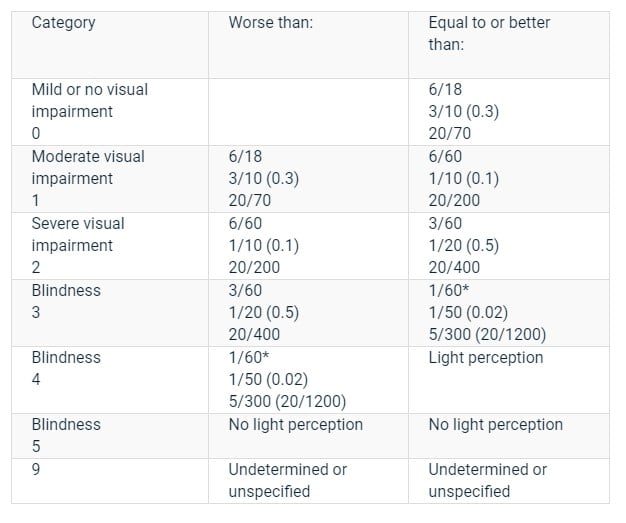
These distinctions are essential for selecting the correct codes from category H54 (Blindness and low vision). Accurate documentation for coding visual impairment should clearly specify:
- Visual acuity measurements
- Laterality (right eye, left eye, bilateral)
- Whether impairment is moderate, severe, profound, or categorized as blindness
- Presence of visual field restriction
In addition to diagnostic coding, documentation should include any recommended interventions. Patients with low vision often benefit from assistive devices such as telescopic glasses, light-filtering lenses, magnifiers (handheld or stand), closed-circuit television systems, and reading prisms. While these aids are not coded as diagnoses, their use supports medical necessity and comprehensive care planning.
Clear, detailed clinical documentation ensures compliant ICD-10 coding, supports accurate reporting of disease severity, and helps healthcare organizations capture the full clinical picture of patients with low vision or blindness.
What Are the ICD-10 Codes for Low Vision and Blindness?
The ICD-10 codes for low vision and blindness come under the H54 category (Visual impairment including blindness).
H54 Blindness and Low Vision
H54.0 Blindness, both eyes
H54.0X Blindness, both eyes, different category levels
H54.0X3 Blindness right eye, category 3
H54.0X33 Blindness right eye category 3, blindness left eye category 3
H54.0X34 Blindness right eye category 3, blindness left eye category 4
H54.0X35 Blindness right eye category 3, blindness left eye category 5
H54.0X4 Blindness right eye, category 4
H54.0X43 Blindness right eye category 4, blindness left eye category 3
H54.0X44 Blindness right eye category 4, blindness left eye category 4
H54.0X45 Blindness right eye category 4, blindness left eye category 5
H54.0X5 Blindness right eye, category 5
H54.0X53 Blindness right eye category 5, blindness left eye category 3
H54.0X54 Blindness right eye category 5, blindness left eye category 4
H54.0X55 Blindness right eye category 5, blindness left eye category 5
H54.1 Blindness, one eye, low vision other eye
H54.10 …… unspecified eyes
H54.11 Blindness, right eye, low vision left eye
H54.113 Blindness right eye category 3, low vision left eye
H54.1131 …… category 1
H54.1132 …… category 2
H54.114 Blindness right eye category 4, low vision left eye
H54.1141 …… category 1
H54.1142 …… category 2
H54.115 Blindness right eye category 5, low vision left eye
H54.1151 …… category 1
H54.1152 …… category 2
H54.12 Blindness, left eye, low vision right eye
H54.121 Low vision right eye category 1, blindness left eye
H54.1213 …… category 3
H54.1214 …… category 4
H54.1215 …… category 5
H54.122 Low vision right eye category 2, blindness left eye
H54.1223 …… category 3
H54.1224 …… category 4
H54.1225 …… category 5
H54.2 Low vision, both eyes
H54.2X Low vision, both eyes, different category levels
H54.2X1 Low vision, right eye, category 1
H54.2X11 Low vision right eye category 1, low vision left eye category 1
H54.2X12 Low vision right eye category 1, low vision left eye category 2
H54.2X2 Low vision, right eye, category 2
H54.2X21 Low vision right eye category 2, low vision left eye category 1
H54.2X22 Low vision right eye category 2, low vision left eye category 2
H54.3 Unqualified visual loss, both eyes
H54.4 Blindness, one eye
H54.40 …… unspecified eye
H54.41 Blindness, right eye, normal vision left eye
H54.413 Blindness, right eye, category 3
H54.413A Blindness right eye category 3, normal vision left eye
H54.414 Blindness, right eye, category 4
H54.414A Blindness right eye category 4, normal vision left eye
H54.415 Blindness, right eye, category 5
H54.415A Blindness right eye category 5, normal vision left eye
H54.42 Blindness, left eye, normal vision right eye
H54.42A Blindness, left eye, category 3-5
H54.42A3 Blindness left eye category 3, normal vision right eye
H54.42A4 Blindness left eye category 4, normal vision right eye
H54.42A5 Blindness left eye category 5, normal vision right eye
H54.5 Low vision, one eye
H54.50 …… unspecified eye
H54.51 Low vision, right eye, normal vision left eye
H54.511 Low vision, right eye, category 1-2
H54.511A Low vision right eye category 1, normal vision left eye
H54.512A Low vision right eye category 2, normal vision left eye
H54.52 Low vision, left eye, normal vision right eye
H54.52A Low vision, left eye, category 1-2
H54.52A1 Low vision left eye category 1, normal vision right eye
H54.52A2 Low vision left eye category 2, normal vision right eye
H54.6 Unqualified visual loss, one eye
H54.60 …… unspecified
H54.61 Unqualified visual loss, right eye, normal vision left eye
H54.62 Unqualified visual loss, left eye, normal vision right eye
H54.7 Unspecified visual loss
H54.8 Legal blindness, as defined in USA
Key Ophthalmology Coding Guidelines
Ophthalmology coding guidelines outline the documentation and sequencing requirements necessary for compliant ICD-10-CM code assignment in vision care.
- Code First: Any associated underlying cause of the blindness, such as Diabetic Retinopathy or Glaucoma, should be coded first.
- Laterality: Documentation must specify right eye, left eye, or bilateral. AAPC guidelines advise against using “unspecified” codes, urging documentation to detail whether each eye is blind, has low vision, or has normal vision. Unspecified” codes are often rejected by payers.
- Bilateral Conditions (H54.0X, H54.1X, H54.2X): When both eyes are affected, documentation must specify the visual impairment category for each eye. If unknown, use codes for “unqualified visual loss, both eyes”.
- Unilateral Conditions (H54.4-, H54.5-, H54.6-): If only one eye is affected, document which eye (left or right) and the status of the other eye (e.g., normal vision).
- Excludes: Do not use these codes for Amaurosis Fugax (code G45.3 Transient cerebral ischemic attacks and related syndromes). H54 codes are intended for permanent visual impairment, not temporary retinal ischemia.
Here are some specific examples of ICD-10 codes for different levels of vision loss with laterality specified:
H54.11: Blindness in the right eye, low vision in the left eye.
H54.41: Blindness in the right eye, normal vision in the left eye.
H54.62: Unqualified visual loss in the left eye, normal vision in the right eye.
Adhering to ICD-10 coding guidelines for ophthalmology vision loss ensures accurate reimbursement, reduces claim denials, and supports proper reporting of visual impairment severity.
Documentation Requirements for Vision Impairment
For accurate ICD-10 coding of low vision and blindness (H54 category), documentation must clearly support the level and laterality of visual impairment. Incomplete or vague charting can lead to unspecified code assignment, claim denials, or compliance risks.
Below are the key documentation requirements for coding low vision and blindness:
- Best Corrected Visual Acuity (BCVA)
Documentation must include:
- Visual acuity measurement for each eye separately
- Measurement in the better-seeing eye
- Confirmation that acuity reflects best correction (with glasses or contact lenses)
Example:
Right eye: 20/80 (best corrected)
Left eye: 20/200 (best corrected)This information determines whether the condition qualifies as:
- Moderate visual impairment
- Severe visual impairment
- Profound visual impairment
- Near-total impairment
- Blindness
- Laterality
ICD-10 requires clear specification of:- Right eye
- Left eye
- Bilateral involvement
Failure to document laterality may result in unspecified H54 codes.
- Visual Field Testing (If Applicable)
If visual field restriction contributes to impairment, documentation should include:
- Degrees of remaining visual field
- Whether field is constricted to 20 degrees or less (legal blindness criteria)
Visual field findings can affect classification and coding selection.
- Severity Category
The provider should clearly document the severity level, such as:
- Mild visual impairment
- Moderate visual impairment
- Severe visual impairment
- Profound visual impairment
- Blindness (including legal blindness when applicable)
Coders should not assign severity unless it is supported by documented clinical findings.
- Underlying Cause
When known, the underlying condition must also be documented and coded, such as:
- Age-related macular degeneration
- Diabetic retinopathy
- Glaucoma
- Cataract
- Retinal detachment
Per ICD-10 guidelines, code the underlying etiology first, followed by the appropriate H54 code when applicable.
- Impact on Activities of Daily Living (ADLs)
While not required for code assignment, documentation of functional limitations (difficulty reading, driving, cooking, or managing medications) supports:
- Medical necessity
- Risk adjustment
- Care planning
- Assistive Devices and Management Plan
Include documentation of:
- Low vision aids (magnifiers, telescopic lenses, etc.)
- Referrals (low vision specialist, rehabilitation services)
- Follow-up care plan
Medical Coding for Low Vision and Blindness – Get Expert Support
Accurate reporting of ICD-10 codes for low vision and blindness requires detailed documentation, correct severity classification, and proper sequencing of underlying conditions. Partnering with a specialized medical coding company can help ensure compliance, reduce claim denials, and optimize reimbursement. Many eye care providers are now leveraging outsourced medical billing and coding services, enhanced by AI-assisted medical coding, to improve accuracy, streamline workflows, and maintain up-to-date adherence to evolving ophthalmology coding guidelines.
Get reliable, AI-assisted medical coding services tailored to ophthalmology practices.

More from This Author