Dental practice management includes a wide spectrum of tasks – from providing quality care, improving the patient experience, staff coordination and dental appointment scheduling to effective dental revenue cycle management (RCM) and regulatory compliance. With constantly evolving industry regulations, new technologies, insurance complexities, increased patient expectations, and operational bottlenecks, and rising competition, managing a dental practice involves several challenges. Efficient management is key to overcome these challenges and operate a successful dental practice, improving both patient care and profitability.
In this post, we’ll explore proven ways to streamline your dental practice and boost day-to-day efficiency.
Optimize Your Dental RCM Today
What Is Dental Practice Management?
Dental practice management covers all the administrative and operational functions that keep a dental clinic running smoothly—from scheduling and patient communication to staff coordination, billing, clinical workflows, compliance, marketing and growth. The goal is to boost efficiency, enhance patient satisfaction and retention, support long-term financial stability, and create a positive, productive environment. Many practices rely on specialized practice management software to streamline these tasks and improve overall performance.
Integrating administrative and clinical functions is essential for building a smooth, efficient, and patient-centered dental practice. When scheduling, billing, documentation, and communication are aligned with clinical workflows, the entire team can operate with fewer errors, faster turnaround times, and better coordination. This integration reduces bottlenecks, promotes a smooth dental patient experience, prevents missed information, strengthens compliance, and ensures that providers have the accurate, up-to-date data they need for quality care. This leads to better patient experiences, higher productivity, and a more financially stable practice.
Practical Strategies to Streamline Dental Office Workflows
Efficient workflows are the backbone of a successful dental practice. By organizing everyday processes, integrating technology, and improving how your team works together, you can save time, minimize errors, enhance performance, and deliver a better experience for patients. Here are some practical ways to streamline your operations.
- Efficient Appointment Scheduling and Patient Flow
Efficient scheduling gives front-office staff better control, reduces missed appointments, and keeps daily workflows running smoothly. An intuitive online scheduling system—with real-time availability, automated appointment reminders, confirmations, waitlist management, and recall notifications—helps reduce wait times, minimize no-shows, and ensures dentists spend more time on patient care. Patients can book anytime from their devices, reducing phone traffic and improving convenience. Clear cancellation policies, shared during intake and across communication channels, set expectations and prevent last-minute disruptions.
Streamlined clinical flow depends on consistent treatment planning. Standardized protocols and digital planning tools help the team understand next steps, appointment length, and equipment needs. Room utilization also improves when supplies are prepared in advance with the necessary supplies based on the day’s schedule, allowing providers to move efficiently between procedures.
- Insurance Verification and Eligibility Checks
Insurance verification should always be completed before treatment. This includes confirming patient information, plan details, coverage dates, deductibles, co-pays, coinsurance, coverage limits, in-network status, COB, waiting periods, and renewal dates. Proper verification helps avoid claim rejections and gives patients clear, accurate cost expectations.
While automated benefit checks save time, they have limitations. Because insurance data varies widely across carriers and portals, automated tools often miss important information—such as accurate deductibles, frequency limits, or used benefits—leading to billing errors and inaccurate estimates.
A dedicated dental insurance verification specialist can provide a full, accurate breakdown of a patient’s benefits, including covered procedures, percentage coverage, remaining benefits, plan maximums, and prior usage. This level of accuracy supports cleaner claims, fewer denials, and a smoother financial experience for both the practice and the patient.
- Staff Training and Workflow Mapping
While front-desk automation streamlines tasks like scheduling, check-ins, reminders, and billing, having efficient, well-trained staff is essential smoother workflows, better patient experiences, and improved productivity across the practice.
Ongoing staff training ensures everyone understands their roles, follows consistent processes, and uses practice management tools effectively. Regular training sessions ensure staff can handle tasks such as front-office procedures, clinical protocols, communication, and software updates more confidently and efficiently.
Workflow mapping further strengthens practice operations by visually outlining each step of key processes, from patient intake and scheduling to treatment planning, billing, and follow-up. Mapping helps identify bottlenecks, duplicate steps, and gaps in communication, allowing the team to redesign and improve workflows. Effective task delegation ensures the right team members handle the right responsibilities, reducing bottlenecks, improving productivity, and allowing dentists to focus more on patient care.
Tracking staff productivity metrics is also crucial to identify workload imbalances, spot inefficiencies, and ensure every team member is operating at their full potential. Use staff meetings to review key numbers—production, collections, overhead, new patients—and identify what needs improvement.
- Accurate Coding and Documentation
A dentist’s clinical decisions drive the care provided, but accurate documentation using current CDT codes is essential for proper claim submission and reimbursement. Ensure every procedure is recorded in both the patient’s dental record and the claim form. Keep coding up to date by reviewing CDT code changes annually and providing staff training on new, revised, or deleted codes.
Equally important is documenting the medical necessity of each procedure, including patient history, clinical findings, diagnostic tests, treatment rationale, and supporting documents. Accurately documenting medical necessity ensures compliance, reduces claim denials, supports proper reimbursement, and ensures patients receive the care they need.
- Efficient Dental Billing and Revenue Cycle Management
Improving billing and collections in dental practices is critical to the financial health of a dental practice. Streamlined processes ensure timely reimbursements, reduce errors, and free up staff to focus on patient care. Successful RCM involves:
- Clean Claim Submission: Submitting accurate, complete claims is the first step toward efficient revenue management. This includes proper CDT coding, verified patient and insurance information, and thorough documentation of medical necessity. Clean claims reduce rejections, accelerate payment, and minimize administrative burden.
- Payment Posting and EOB Reconciliation: Accurate posting of payments and reconciliation of Explanation of Benefits (EOBs) ensure your financial records reflect actual reimbursements. By identifying underpayments, overpayments, or discrepancies that may require follow-up, timely reconciliation helps maintain financial transparency and control.
- Tracking Accounts Receivable (AR), Denials, and Appeals: Monitoring AR and analyzing denials are key to maintaining healthy cash flow. A structured approach to tracking unpaid claims, following up on denials, and submitting appeals ensures maximum recovery of revenue and prevents income loss.
Delegating the dental billing process to a specialized RCM company can ensure efficient handling of billing, claim follow-ups, denials, and appeals, leading to faster payments and higher collections. It allows your team to focus on patient care while leveraging specialized knowledge, AI automation and technology to optimize revenue performance.
- Streamlining Practice Workflow with Technology
Adopting digital tools is essential for boosting efficiency across every aspect of a modern dental practice:
- Dental Practice Management Software (PMS): Centralizes scheduling, billing, charting, and reporting. Cloud-based systems offer flexibility and remote access, while on-premise solutions provide local control.
- Automation and AI Tools: Automates repetitive tasks like coding, sends smart reminders, and provides AI-driven insights to improve treatment plan acceptance.
- Patient Engagement Platforms: Enhances patient communication in dental practices with patient portals, mobile apps, online bill pay, tele-dentistry, and real-time messaging for faster responses.
- Data Analytics and Reporting: Tracks key performance metrics—production, collections, case acceptance, AR days—and forecasts workload and revenue to support informed decision-making.
Transform Dental Practice Operations with Expert RCM Support
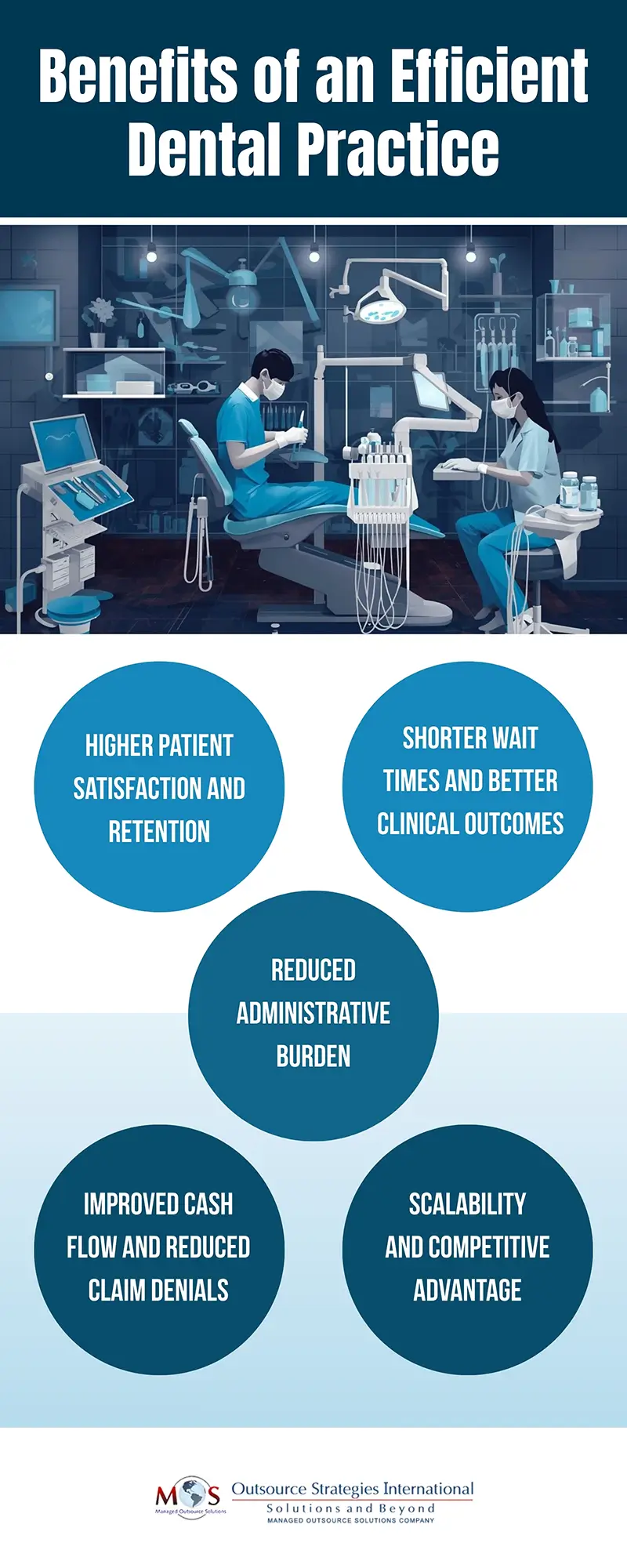
Running a successful dental practice requires more than excellent clinical care—it demands efficient revenue cycle processes, strong administrative workflows, and the ability to keep pace with constant payer and regulatory changes. If your practice has been struggling with persistent claim denials, long A/R cycles, mounting administrative burden, staff shortages, or rapid growth, it may be time to delegate critical aspects of dental RCM and practice management to a trusted expert.
By working with a specialized dental RCM provider, you gain access to dedicated billing professionals, streamlined workflows, improved cash flow, and the operational stability needed to focus fully on patient care.
Cut Denials and Accelerate Collections

More from This Author