A successful start to 2026 begins with streamlined revenue management and dependable healthcare billing support from Outsource Strategies International (OSI). As part of our healthcare billing New Year 2026 offer, we are rolling out a limited-time promotion on our RCM services.
You can start with a free trial* of our insurance verification and prior authorization services and enjoy 25% OFF your first invoice (for a purchase above $200). This offer is valid until January 31, 2026, giving you a smart, cost-effective way to improve cash flow and operational efficiency right from the start of the year.
Ready to make 2026 your most profitable year yet?
Why OSI Is the Right RCM Partner for Medical and Dental Practices
Choosing the right revenue cycle management partner is just as important as choosing the right strategy. OSI brings over two decades of experience supporting medical and dental practices with end-to-end RCM services, delivered by trained professionals who understand the complexities of healthcare billing.
From accurate coding and timely claim submission to denial management and AR follow-ups, our processes are designed to improve reimbursements, reduce administrative burden, and maintain strict compliance standards. This New Year offer gives you the opportunity to experience our proven expertise directly—without hidden fees or long-term contracts.
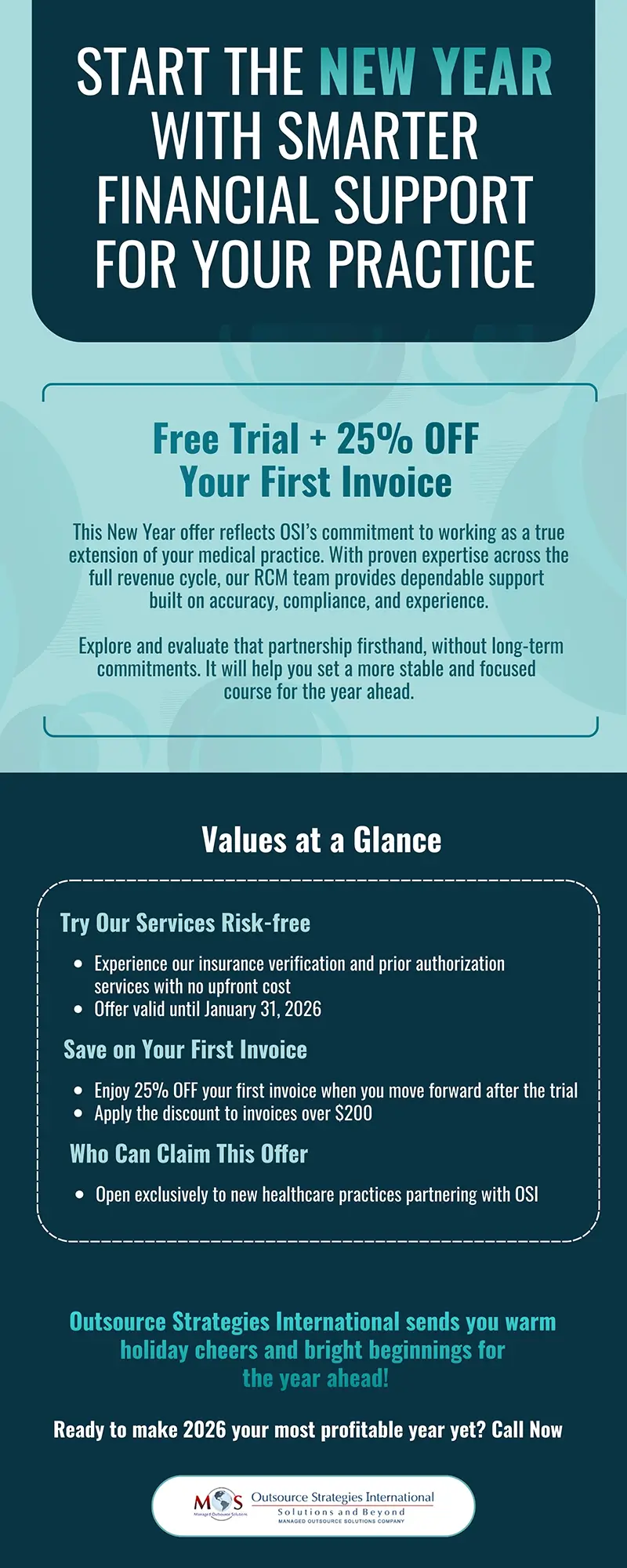
*Contact us for more offer details
More from This Author