
Busy waiting rooms are only one visible challenge within daily operations during high-demand periods in healthcare. While providers focus on patient care, another pressure point intensifies behind the scenes — seasonal healthcare billing surges within medical and dental billing operations. Claim volumes rise, follow-ups multiply, and even small inefficiencies become costly when the intake pace accelerates.
These seasonal spikes in dental and medical billing workloads are predictable patterns that affect claims accuracy, cash flow, and compliance all at once. A temporary rush can quickly evolve into increased denial rates, delayed reimbursements, and financial instability for practices. Understanding why these spikes happen—and how to prepare for them—can be the difference between a chaotic quarter and a controlled, profitable medical revenue cycle management.
Understanding Seasonal Volume Surges in Healthcare
Seasonal billing spikes follow predictable patient behavior, insurance coverage cycles, and staffing patterns. These shifts cause sudden increases in claim volume within short periods, which places added pressure on billing workflows.
- Insurance enrollment periods and plan changes – New or updated coverage leads to increased patient visits, eligibility rechecks, and benefits validations, which raises front-end billing workload.
- End-of-year deductible exhaustion – Patients schedule pending procedures once deductibles are met, which creates short-term surges in high-value claims.
- Back-to-school demand – Pediatric and urgent care visits increase during school intake periods, adding volume to registration, coding, and claim submission queues.
- Flu season spikes – Seasonal illnesses drive higher visit frequency and same-day billing turnaround requirements.
- Holiday staffing gaps – Reduced staffing levels slow claim processing and follow-up while patient volumes remain elevated.
These combined patterns create predictable billing pressure points that require proactive strategies to prevent backlogs and delays.
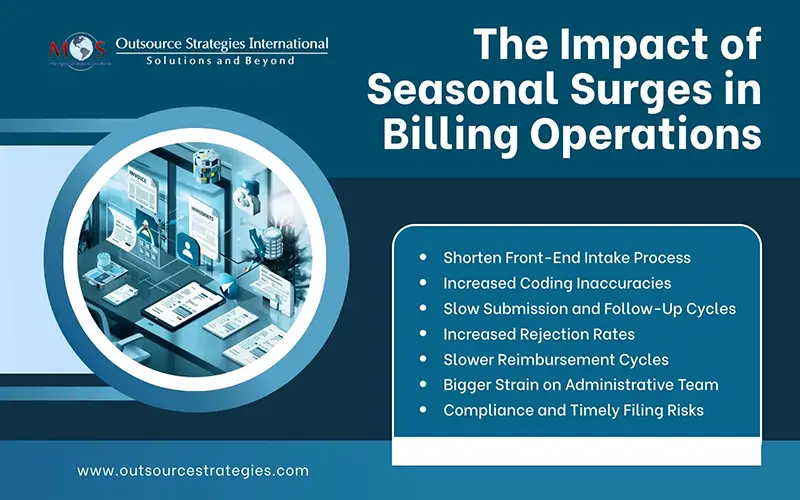
How Seasonal Spikes Impact Billing Operations
Seasonal surges change how billing teams operate across every stage of the revenue cycle. Increasing appointment rates, tighter turnaround, and limited staff place direct pressure on intake, coding, and claim submission workflows. Without structural adjustments, routine billing operations begin to break under this high-volume stress.
The most common areas of disruption include:
- Shorten Front-End Intake Process: High patient inflow shortens the time available to verify patient details, coverage information, and financial responsibility. This increases the risk of incorrect or incomplete claim data entering the billing system.
- Increased Coding Inaccuracies: When encounters are processed in high volumes, coders have less time to validate documentation and modifiers. This raises the likelihood of missed charges, incorrect code selection, and inconsistent application of payer rules.
- Slow Submission and Follow-Up Cycles: Rising claim volumes extend internal workload, which delays initial submissions and reduces the consistency of follow-up activity on unpaid and partially paid claims. These delays increase days in accounts receivable (A/R) and can strain operating cash flow.
- Increased Rejection Rates: Incomplete documentation, missing prior approvals, and mismatched patient information become more common during peak periods, directly increasing preventable denial volume. A surge in denials not only delays payments but also increases the administrative burden of rework and appeals.
- Slower Reimbursement Cycles: Claims submitted during peak periods may experience longer processing times from payers. Slower resolution cycles push receivables further out, making month-to-month collections less predictable and harder to manage. Combined with backlogs and denials, this can significantly extend payment timelines, impacting financial predictability.
- Bigger Strain on Administrative Team: Billing teams may be required to manage higher amounts of claims, follow-ups, and payer communication within limited administrative capacity. Sustained high workloads reduce review depth and weaken internal quality control routines — factors that further increase the risk of errors and workflow inefficiencies.
- Compliance and Timely Filing Risks: During high-demand cycles, missed deadlines become more likely. Overlooked timely filing limits, incomplete documentation, and delayed appeals can result in permanent revenue loss if claims become unrecoverable.
These operational disruptions demonstrate why billing systems must be designed to scale. Without proactive planning to manage seasonal swings, volume changes can quickly reduce workflow quality, erode profitability, and diminish compliance.
Proactive Strategies to Manage Seasonal Billing Surges
Seasonal workload increases cannot be handled with routine billing workflows. Practices need front-end focused, structured operations that protect accuracy, turnaround time, and cash flow when claim volumes spike. Proactive planning shifts billing teams from reactive recovery to controlled revenue cycle management.
The following strategies help practices maintain billing stability during peak cycles:
- Advanced Capacity Planning
Seasonal appointment patterns can be predicted using historical encounter and claim submission data. Practices that analyze prior year billing volumes can forecast required staffing levels, appointment rates, and follow-up requirements before workloads rise. This allows the billing team to adjust internal resource allocation, modify submission schedules or partner with specialized billing services ahead of peak periods. Without proper capacity planning, patient encounters increase faster than teams can manage, which delays submissions and weakens follow-up consistency.
- Patient Information Intake Standardization
High-volume periods require standardized intake workflows that prevent incomplete data from entering billing systems. Structured intake checklists ensure that patient demographics, coverage details, and financial responsibility are captured consistently across all encounters. This reduces administrative rework caused by missing or mismatched information. Standardizing the patient information intake processes also allows tasks to be distributed across staff without reducing data quality.
- Automated Eligibility, Coding and Claim Checks
Many practices still rely on manual verification processes for tasks such as eligibility verification and prior authorization. During seasonal surges, manual verification becomes a bottleneck and exposes practices to preventable claim errors. Automated validation systems verify coverage status, payer-specific coding rules, and documentation completeness before claims are submitted. This significantly reduces risk of denials and improves first-pass claim acceptance rates.
Automated checks also ensure accurate application of payer requirements across all billing staff. By standardizing clinical data entry, modifier usage, and documentation review criteria, claims enter payer systems in a cleaner, more consistent format.
- Structured Follow-Up Schedules
Seasonal surges often cause follow-up activities to become inconsistent or delayed. Structured schedules define exact timelines for payer outreach, documentation requests, and unpaid claim resolution. Consistent follow-up also improves recovery rates and prevents receivables from aging into higher risk categories.
- Real-Time Workflow Monitoring
Peak cycles require continuous visibility into unprocessed claims, submission status, and follow-up backlogs. Real-time monitoring tools allow RCM specialists to identify growing billing delays before they affect revenue flow. When excessive claim volumes can be detected early, practices can adjust workflows, allocate more resources, and automate routine tasks to prevent slow processing times.
These proactive controls help practices maintain billing accuracy, processing speed, and cash flow stability when volumes surge. Without structured surge planning, even well-run billing operations become vulnerable to delays, errors, and revenue leakage.
Build Surge-Ready Operations with Outsourcing
Seasonal volume fluctuations require more than short-term fixes — they demand billing systems that are designed to scale. Partnering with experienced providers of dental/medical billing and coding services allows practices to extend their administrative capacity during peak cycles, maintain consistent claim quality, and protect reimbursements when internal teams are under pressure. By leveraging specialized billing support, dental and medical practices can strengthen revenue cycle stability, reduce denial exposure, and operate with greater financial predictability — even during the most demanding seasons.
Need Help Managing Seasonal Billing Surges?
Optimize your intake and authorization workflows while improving claim accuracy with expert billing and authorization support.

More from This Author