

Twenty ICD-10 Codes to Document Animal and Bird Bites

by | Posted: Aug 19, 2019 | Medical Coding

Share this post:

People may visit doctors for diverse conditions and injuries. Animal and bird bites and related injuries are also quite common. The ICD-10 code set has all specific codes to document bites and injuries from all animals, let that be dog, cat, horse, duck or even crocodile. The ICD-10-CM code set for 2019 include a grand total of 71,932 codes. Professional medical coding companies will be ready to code for such injuries from this code set and they will be up to date with the changing billing and coding standards.

Here’s a list of 20 ICD-10-CM codes related to animal bites.
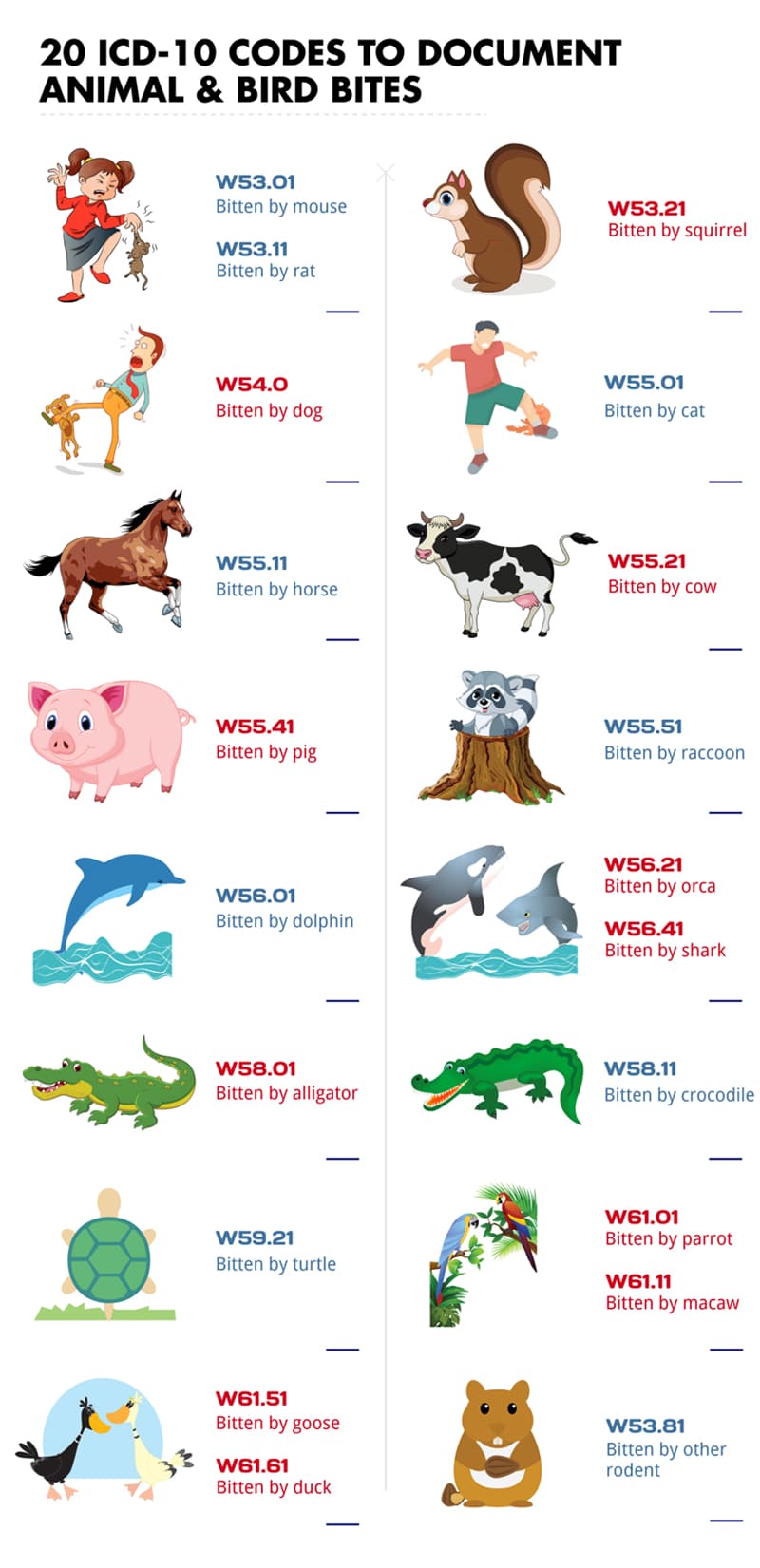
Twenty ICD-10 Codes to Document Animal and Bird Bites

Assigning the most specific diagnosis code that describes a disease or condition is crucial for the approval of medical claims and thus on-time payment for hospitals and emergency rooms. Experienced coders will focus on the highest level of specificity. For accurate documentation, it is ideal for practices to consider physician billing services provided by an experienced company.

Julie Clements, OSI’s Vice President of Operations, brings a diverse background in healthcare staffing and a robust six-year tenure as the Director of Sales and Marketing at a prestigious 4-star resort.
More from This Author
Julie Clements

Subscribe to Our Newsletter

Stay informed with our latest updates and insights.

Subscription Form

Related Posts

Abdominal Aortic Aneurysm (AAA) – Screening and Coding Guidelines

Abdominal Aortic Aneurysm (AAA) – Screening and Coding Guidelines

Abdominal Aortic Aneurysm (AAA) screening is subject to specific payer coverage rules and documentation requirements, making it a high-risk area for billing errors. Claims for this preventive cardiovascular imaging are closely reviewed by both Medicare and commercial...

What Are the ICD-10 Codes for Hyperlipidemia?

What Are the ICD-10 Codes for Hyperlipidemia?

Hyperlipidemia is a common medical condition characterized by elevated levels of lipids—such as cholesterol and triglycerides—in the blood. In the ICD-10 classification, hyperlipidemia falls under the “E” category, which includes endocrine, nutritional, and metabolic...