

In the contemporary dental landscape, maintaining strong financial performance goes beyond delivering quality patient care. A successful practice relies on an efficient dental revenue cycle management system. In this process, dental insurance verification, increasingly supported by Artificial Intelligence, plays a vital role in ensuring accurate and timely reimbursements. Despite these advancements, one of the most overlooked threats to profitability remains underpaid dental claims. Unlike claim denials, which are quickly identified and addressed, underpayments are far more subtle and often go unnoticed. They can quietly erode your practice’s revenue over time. Many dental offices assume that once a payment is received, the process is complete. However, without leveraging Artificial Intelligence for deeper payment analysis and maintaining strong dental insurance verification and review processes, this assumption can lead to continuous and significant revenue loss.
What Is an Underpaid Dental Claim?
Before addressing the issue, it is important to understand – what is an underpaid dental claim?
An underpaid dental claim occurs when an insurance company reimburses less than the expected amount based on the agreed fee schedule or contract. This doesn’t mean the claim was denied, in fact, partial payment makes it easier to overlook. In healthcare billing, underpayments typically happen when the reimbursement is lower than the contracted rate due to errors, misinterpretations, or payer policies.
For example, if your practice expects ₹8,000 for a procedure but receives only ₹5,500 without a clear explanation, the difference represents lost revenue. Since, some payment is received, these discrepancies may remain unchecked, making them far more dangerous than outright denials.
Stop losing revenue to unnoticed underpaid dental claims.
The Hidden Impact of Underpaid Dental Claims
Underpaid claims may seem minor at first glance, but their cumulative impact can be substantial. Even small discrepancies across multiple claims can result in thousands of rupees lost each month. The real danger lies in their invisibility:
- Payments are posted without verification
- Staff assume insurers pay correctly
- No comparison is made between expected and actual reimbursement
Over time, this creates serious financial strain. In fact, billing inefficiencies and unnoticed discrepancies can significantly impact practice revenue and operational efficiency. This is why underpayments are often referred to as “silent revenue killers.”
Common Reasons for Underpaid Dental Claims
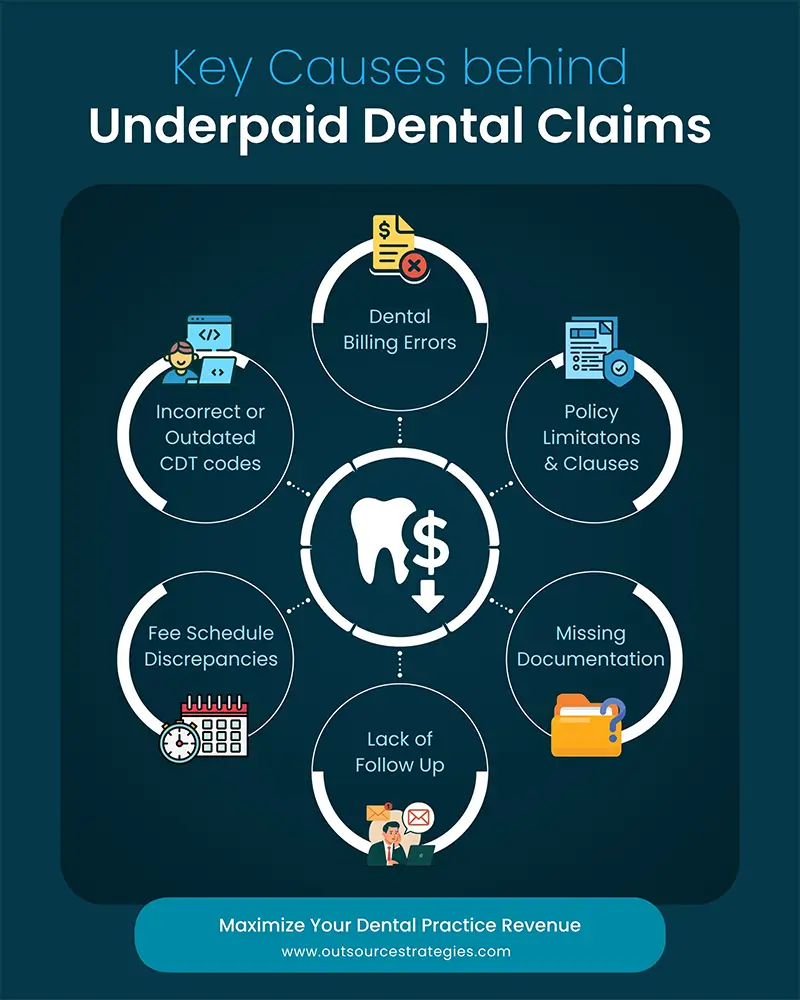
Understanding the common reasons for underpaid dental claims is crucial for prevention. Here are the most frequent causes:
- Dental Billing Errors: Dental billing errors are one of the primary reasons for underpayments. Mistakes such as incorrect patient information, missing details, or inaccurate coding can directly impact reimbursement. Even small errors can lead to reduced payments or delays.
- Incorrect or Outdated CDT Codes: Using outdated or incorrect procedure codes can result in insurers reimbursing at a lower rate or applying downgrades. Coding inaccuracies are among the most common causes of claim issues.
- Missing Documentation: Incomplete documentation such as missing X-rays, clinical notes, or narratives can cause insurers to reduce payments instead of fully denying the claim.
- Fee Schedule Discrepancies: Sometimes, the insurance payer’s system may not align with your contracted fee schedule, leading to lower reimbursements than expected.
- Policy Limitations and Clauses: Insurance plans include limitations such as frequency caps, waiting periods and annual maximums. These factors can reduce the payable amount even when the claim is valid.
- Lack of Follow-up: Without a proper follow-up system, underpayments often go unchallenged. Many practices focus only on denied claims, leaving underpaid ones unresolved.
Key Signs That Your Practice Has Underpaid Claims
Many practices are unaware that they may have underpayments. Here are some clear warning signs:
- Reimbursements Consistently Lower Than Expected: If payments are regularly less than your contracted fee schedule, it’s a clear red flag. This often indicates issues with dental insurance verification, incorrect fee schedules, or unnoticed payer adjustments.
- Frequent Unexplained Adjustments on EOBs: When Explanation of Benefits (EOBs) show adjustments without clear reasons, it may signal underpayments. These discrepancies may easily be overlooked unless carefully reviewed during payment posting.
- Patterns of Reduced Payments from Specific Insurers: If a particular insurance company consistently pays less than expected, it could point to contract misalignment or processing errors. Monitoring payer trends is essential to catch recurring underpayments.
- High Accounts Receivable (AR) Despite Steady Patient Flow: A growing AR balance, even when patient volume is stable, can indicate unresolved underpayments. This often happens when claims are partially paid but not properly followed up.
- Lack of Payment Reconciliation Process: If your practice doesn’t compare billed amounts with received payments, underpaid claims can easily go unnoticed. A weak reconciliation process is a major contributor to revenue leakage.
- Minimal or No Follow-up on Paid Claims: Many practices focus only on denied claims and ignore paid ones. Without reviewing paid claims, underpayments remain unchallenged and continue to impact revenue.
If these patterns exist, your practice is likely losing revenue due to underpaid claims.
How to Prevent and Recover Underpaid Claims
Addressing underpayments requires a proactive approach. Here are key strategies:
- Strengthen Dental Insurance Verification: Accurate dental insurance verification is the first step in preventing underpayments. Verify coverage details such as benefits, limitations, waiting periods, and frequency caps before every patient visit. Even small errors at this stage can lead to reduced reimbursements later. Re-verifying closer to the appointment date ensures you’re working with the most up-to-date information.
- Conduct Regular Payment Audits: Routine audits help identify gaps between expected and actual reimbursements. Compare payments against your contracted fee schedules to detect discrepancies early. This proactive approach allows you to catch underpayments before they accumulate. Regular audits also improve accountability and highlight recurring payer issues.
- Improve Documentation and Claim Accuracy: Incomplete or unclear documentation often results in reduced payments instead of outright denials. Ensure every claim includes proper clinical notes, narratives, and supporting attachments like X-rays when required. Accurate documentation justifies the procedure and minimizes the risk of adjustments.
- Minimize Dental Billing Errors: Double-check patient information, CDT codes, and insurance details before submitting claims. Even minor mistakes can lead to lower reimbursements or delays. Investing time in accuracy upfront saves significant revenue in the long run.
- Establish a Strong Follow-up Process: Don’t assume a paid claim is correct—review every Explanation of Benefits (EOB) carefully. Set up a system to track and follow up on discrepancies immediately. Timely follow-ups increase the chances of recovering underpaid amounts. Consistent monitoring ensures no revenue is left uncollected.
- Train and Update Your Billing Team: Ongoing training is essential to keep your billing team updated on coding changes and payer policies. Well-trained staff can identify errors, avoid common pitfalls, and handle underpayment issues effectively. Knowledgeable teams play a key role in revenue protection.
- Leverage Technology or Outsource Billing: Using advanced billing software or outsourcing to experts can significantly reduce underpayments. Automated systems help track claims, flag discrepancies, and ensure accurate submissions. Outsourcing also brings specialized expertise in handling payer negotiations and appeals. This can improve overall collections and streamline your revenue cycle.
Underpaid dental claims remain one of the most overlooked challenges in dental practices today. Unlike denials, they don’t demand immediate attention, yet their long-term impact can be far more damaging. By leveraging Artificial Intelligence alongside a clear understanding of an underpaid dental claim and addressing the common reasons for the underpayment, practices can take a more proactive approach. Strengthening dental insurance verification, reducing dental billing errors, and optimizing dental revenue cycle management – supported by AI-driven insights – can help safeguard revenue and enhance overall financial performance.
Strengthen your dental revenue cycle management with smarter strategies and take control of underpaid claims now.

More from This Author