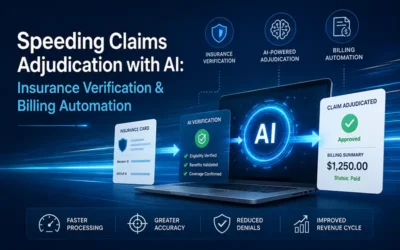
Authorization denials in medical billing remains one of the most persistent challenges for healthcare providers. Prior authorization requirements, evolving payer policies, and manual workflows tend to create gaps that lead to delays, rework, and lost revenue. Today, AI is transforming how providers approach this issue. Combining structured AI support with human judgment enhances the preapproval process with greater precision, speed, and predictive capabilities. This post explores how automation reduces authorization claim denials in medical billing, focusing on real-world applications of AI and the future of denial management.
Root Causes of Authorization Denials
Before diving into solutions, it is important to understand why authorization denial in medical billing occurs. Common causes include:
- Missing or incomplete prior authorization: When required approvals are not obtained or lack necessary details, payers reject the claim outright.
- Incorrect patient eligibility information: Errors in insurance verification forms can lead to denied authorizations due to ineligible services.
- Mismatch between clinical documentation and payer requirements: If the submitted medical records don’t justify the procedure per payer guidelines, the authorization request is denied.
- Delayed submission of authorization requests: Submitting requests after services are rendered or beyond deadlines results in automatic denials.
- Lack of real-time payer rule updates: Using outdated payer policies can cause non-compliance, leading to avoidable authorization denials.
Traditional workflows rely heavily on manual checks and fragmented systems. This increases the likelihood of human error and slows the revenue cycle the entire process, making denial management in healthcare more reactive than proactive.
Struggling with authorization denials in your billing workflow?
Introducing AI Early: A Shift toward Proactive Denial Prevention
AI is no longer a back-end analytics tool, but plays a distinctive role at the very beginning of the revenue cycle. Modern AI-powered billing solutions integrate directly into scheduling, registration, and pre-authorization workflows to identify risks before a claim is even created. Instead of waiting for a denial to occur, AI systems:
- Flag authorization requirements in real time
- Cross-check payer rules against scheduled procedures
- Alert staff about missing or incorrect information
- Recommend next steps for compliance
This early intervention is key to reducing authorization denials and improving clean claim rates.
Practical Applications of AI in Reducing Authorization Denials
Let’s examine how advanced technologies are applied in real-world medical billing workflows:
- Automated Prior Authorization Workflows: AI-powered systems streamline the entire prior authorization process by automatically gathering patient data, clinical information, and payer requirements into a single workflow. These tools can pre-fill authorization forms, validate required fields, and submit requests directly to payers through integrated platforms. By reducing manual data entry and standardizing submissions, this approach minimizes errors and ensures that authorization requests are complete and compliant, significantly lowering the risk of denials.
- Intelligent Work Queues for Billing Teams: Instead of handling authorizations on a first-come, first-served basis, AI organizes tasks based on urgency and denial risk. It prioritizes cases that are more likely to be denied, flags missing documentation, and highlights time-sensitive requests. This allows billing teams to focus their efforts where they are most needed, improving productivity and ensuring that high-risk authorizations are addressed proactively before submission.
- Continuous Learning from Denial Patterns: AI systems continuously analyze past claims and denial data to identify recurring issues and trends. By learning from previous authorization denials, the system can predict potential problems in new requests and recommend corrective actions. Over time, this ongoing learning process helps refine workflows, reduce repeated mistakes, and strengthen overall denial management strategies, making the system smarter and more efficient with each interaction.
The Future of AI in Denial Management and Prior Authorization
The future of AI in denial management and prior authorization is focused on deeper integration, smarter predictions, and more seamless workflows.
What to Expect:
- Fully automated end-to-end authorization processes: AI will handle the entire authorization workflow, from request initiation to approval, with minimal manual intervention.
- Greater use of real-time payer APIs: Seamless integration with payer systems will enable instant eligibility checks and faster authorization decisions.
- Advanced predictive models with higher accuracy: AI models will become more precise in identifying denial risks, helping providers prevent issues before they occur.
- Increased adoption of electronic prior authorization (ePA): More providers will shift to digital authorization systems, reducing paperwork and speeding up approvals.
AI will continue to evolve from a support tool to a strategic asset, helping organizations move from reactive denial management to proactive revenue optimization.
Authorization denials in medical billing are no longer inevitable. With the rise of AI-powered billing solutions, healthcare providers can now prevent most denials before they happen. By leveraging machine learning, NLP, and predictive analytics, AI transforms how authorization processes are managed, making them faster, smarter, and more accurate.
As denial management in healthcare continues to evolve, organizations that embrace this collaborative approach will be best positioned to reduce denials and deliver better patient experiences. Understanding how automation reduces authorization claim denials in medical billing can help healthcare organizations improve revenue cycle efficiency. However, the real power lies in combining technology with human expertise. Automation and AI should be used to improve speed and productivity, but quality assurance by insurance verification experts remains essential for accuracy.
Start optimizing your billing process today

More from This Author